
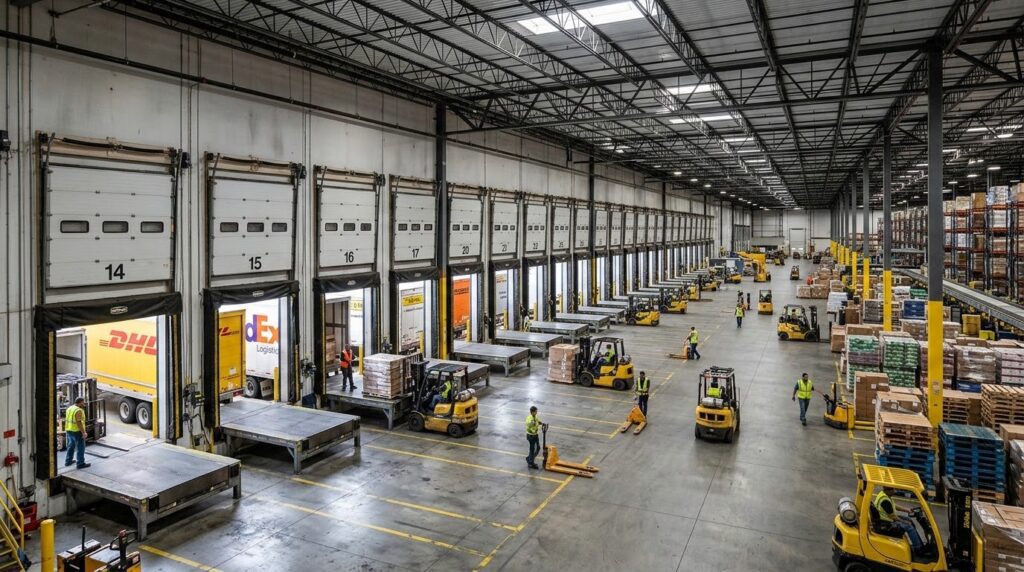
If you manage a commercial facility, the loading dock door is doing more work than almost anything else in the building. It cycles dozens (or hundreds) of times per day, separates conditioned air from outdoor air, secures the inside of the building when the dock is closed, and absorbs the daily wear of forklift traffic and trailer impact. When the door is right for the operation, nobody thinks about it. When it’s wrong, it becomes a constant source of energy loss, downtime, and repair calls.
This guide is for facility managers, operations leaders, and contractors who want to understand what makes a good loading dock door, how the main types compare, and how to match a door to the way your facility actually runs. We’ll cover the three most common dock door categories, the decision factors that should drive the choice, how the door fits into the larger dock system, and what ongoing maintenance looks like.
Why the Loading Dock Door Matters More Than People Think
In most facilities, the dock door gets specified once when the building is constructed and then ignored until something goes wrong. That’s a missed opportunity. The dock door has a direct impact on three things every operations leader cares about.
Throughput. Every second a door spends opening or closing is a second of stalled forklift traffic. At a high-cycle dock, the difference between a 12-second cycle and a 4-second cycle adds up to hours of productive time per week.
Energy cost. An uninsulated or slow-cycling door at a conditioned facility leaks money every time it operates. Wisconsin facilities, in particular, pay a real heating-cost premium for doors that aren’t up to the climate.
Security and reliability. A door that fails unexpectedly during shipping is an operational emergency. The right door, sized correctly and installed properly, becomes infrastructure you stop thinking about.
Types of Loading Dock Doors
There are three main commercial garage door types used at loading docks today. Each is purpose-built for a different combination of throughput, climate, security, and budget. Most facilities end up with a mix, choosing the right door for each opening rather than standardizing on one across the building.
Insulated Sectional Steel Doors
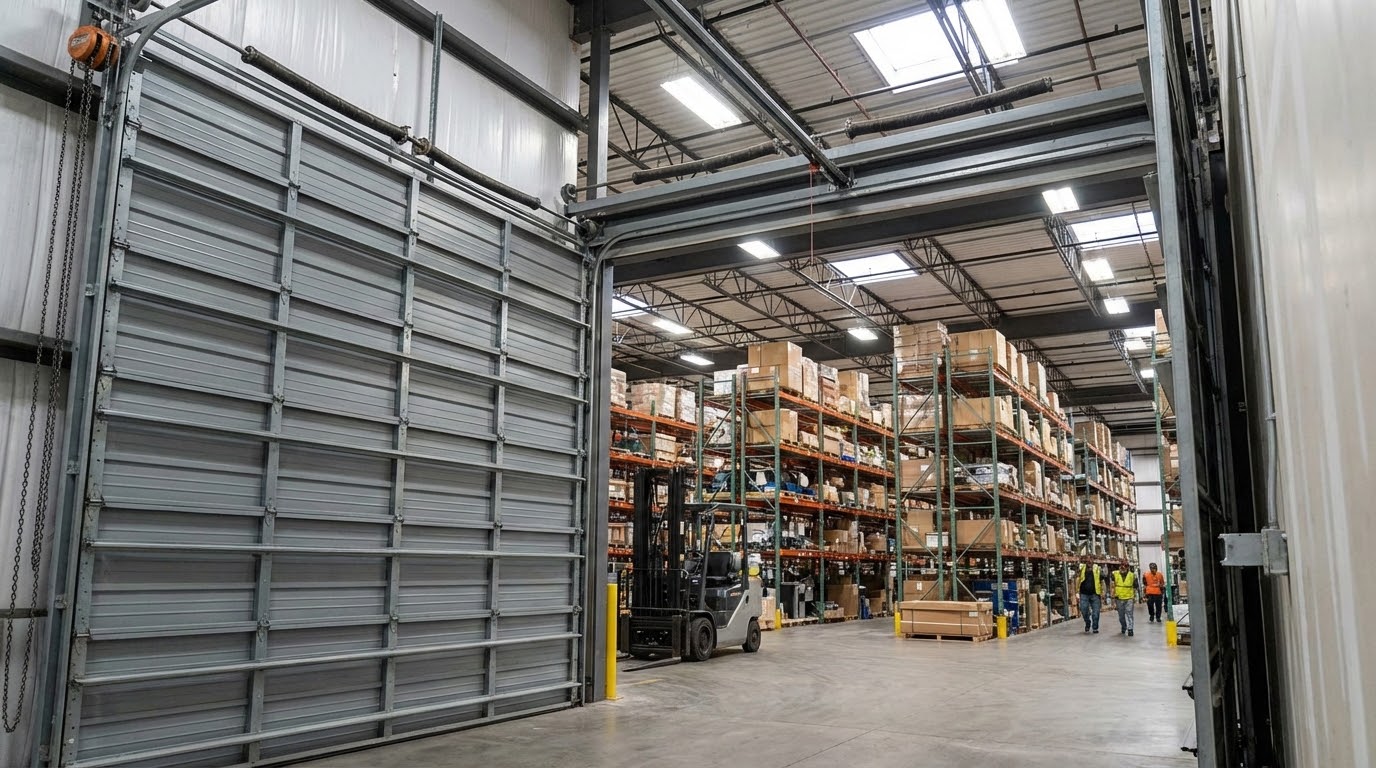
The standard for most loading docks. Sectional doors travel up overhead on tracks and roll back into the ceiling space, which keeps the door out of the way during loading. Insulated panels (typically two- or three-layer construction with polyurethane or polystyrene cores) keep conditioned air inside the building and reduce heating and cooling costs.
Overhead Door’s Thermacore line is the premium option in this category, with three-layer steel-and-polyurethane construction that delivers some of the highest R-values available in a commercial sectional door. For Wisconsin facilities running heated dock areas through the winter, the insulation upgrade typically pays for itself in reduced heating costs over a few seasons.
Best for: the majority of commercial loading docks, especially in conditioned facilities and cold climates.
Tradeoffs: slower cycle speed than high-speed doors, requires overhead clearance for the rolling tracks.
High-Speed Doors (High-Performance Doors)
High-speed doors, sometimes called high-performance doors, roll open and closed at four to eight times the speed of a standard sectional door. Where a typical sectional door takes 12 to 15 seconds to fully open, a high-speed door does it in under 4 seconds. That speed difference matters at high-cycle docks where every open-and-close represents lost conditioned air, increased contamination risk, or stalled forklift traffic.
These doors are built with reinforced fabric or rubber panels rather than rigid steel, which is what allows them to operate at speed without the wear that would destroy a steel door at the same cycle rate. Most also include auto-reverse safety features, soft-bottom edges that minimize damage on impact, and self-repairing mechanisms that allow the door to recover from accidental forklift contact without a service call.
Best for: high-cycle docks (50+ cycles per day per opening), food and beverage facilities, cold storage, clean environments, and any operation where open time is operationally expensive.
Tradeoffs: higher upfront cost than insulated sectional doors, less of a security door (most are paired with a separate after-hours security door), and higher service complexity.
Rolling Steel Service Doors
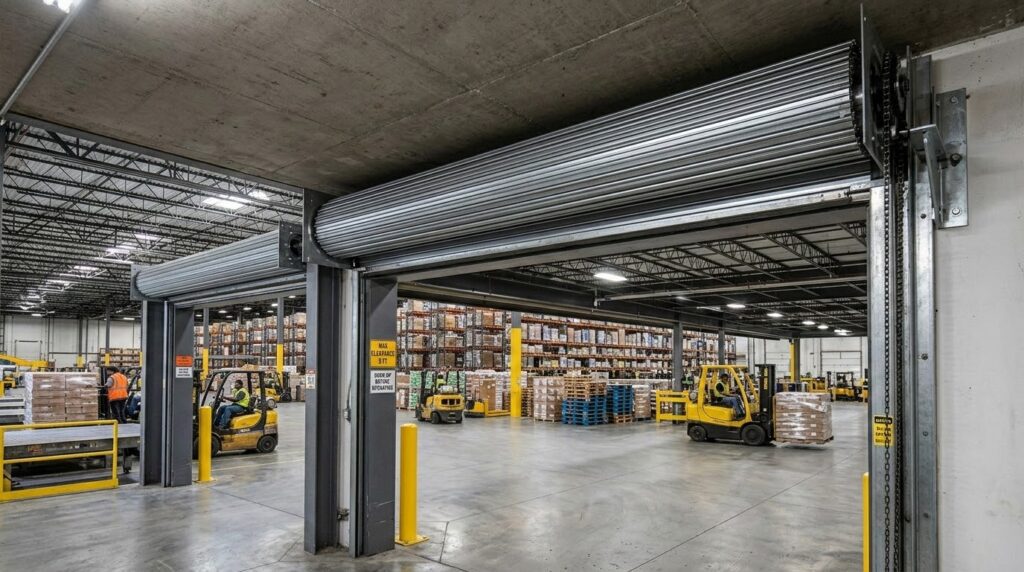
Rolling steel doors coil up into a compact drum above the opening rather than rolling overhead on tracks. That makes them ideal for facilities with limited headroom, tight ceiling spaces, or docks that need maximum overhead clearance for cranes or other equipment. They’re also the most secure of the three types, which makes them a strong choice for after-hours security or for openings that need to resist break-in attempts.
Rolling steel doors come in insulated and non-insulated versions. The non-insulated version is the workhorse of warehouses, distribution centers, and industrial facilities where insulation isn’t a priority. Insulated rolling steel doors are available for conditioned facilities that need the compact footprint.
Best for: tight headroom situations, high-security applications, after-hours security pairings with high-speed doors, and industrial environments where durability matters more than speed or insulation.
Tradeoffs: slower than high-speed doors, less insulation performance than sectional doors, and louder operation.
How to Choose the Right Dock Door for Your Operation
The right door for any opening comes down to four decision factors. Working through them honestly is the difference between a door that fits the operation and a door that becomes a chronic problem.
Cycle Count
How many times does the door open and close in a typical day? A door that cycles 10 times can be a standard insulated sectional. A door that cycles 100 times is going to wear out a sectional door prematurely and probably needs to be a high-speed door. Cycle count is the single biggest driver of which door category fits.
Climate Control
Is the facility conditioned? Does the dock area need to stay heated, cooled, or temperature-controlled? In Wisconsin, this almost always points toward insulated construction. For high-cycle conditioned docks, the combination of a high-speed door (for daily operations) and an insulated sectional or rolling steel door (for after-hours) is often the right answer.
Security
How important is after-hours security? A high-speed door alone is not a security door. Facilities with high-value inventory, exterior dock exposure, or after-hours vulnerability often pair a high-speed operational door with a more secure rolling steel door behind it. The high-speed door handles daily traffic, the rolling steel door secures the opening overnight.
Headroom and Sideroom
Sectional doors need overhead space to roll back into. Rolling steel doors need a smaller footprint but require sideroom for the coiling drum. High-speed doors vary depending on model. Before specifying a door for an existing opening, the available clearances need to be measured. This is one of the most common reasons a door spec gets revised at install.
How Dock Doors Fit Into the Larger Loading Dock System
The door is the most visible piece of dock equipment, but it works in concert with several other systems. Understanding how they connect helps when you’re specifying a new dock or troubleshooting a chronic issue at an existing one.
Dock levelers bridge the gap between the dock floor and the trailer bed. They come in mechanical, hydraulic, and air-powered versions. The right leveler depends on cycle count and trailer mix. Levelers are typically specified and serviced separately from the door.
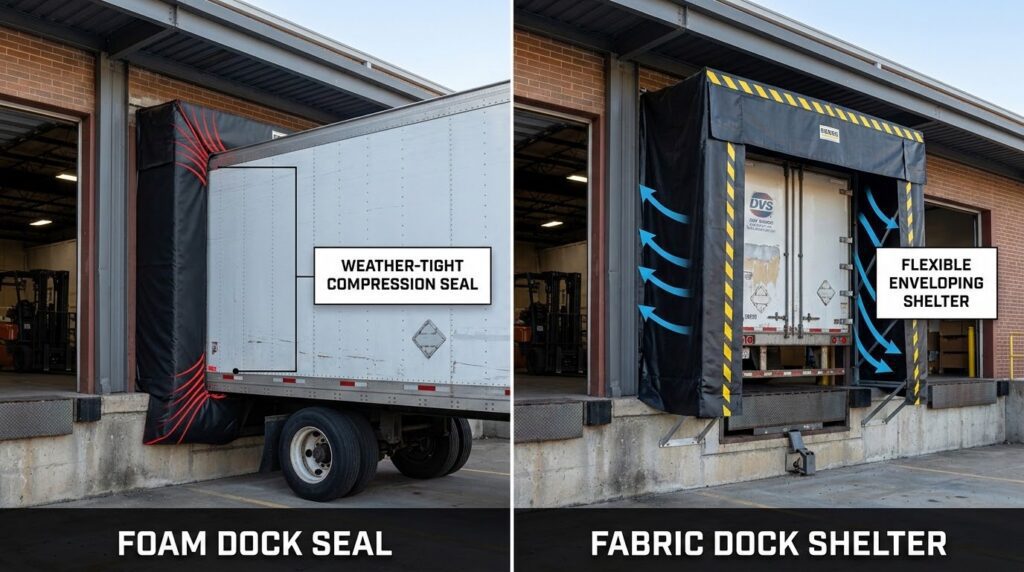
Dock seals and shelters create a weather barrier between the trailer and the building. Seals use compression foam pads (best for consistent trailer sizes), while shelters use fabric curtains that accommodate a wider trailer mix.
Dock bumpers protect the dock face from trailer impact. They’re wear items that need periodic replacement.
Vehicle restraints secure the trailer during loading to prevent creep or early departure. Range from manual chocks to automated hook restraints.
Most facilities work with separate vendors for the door and for the surrounding equipment. The important thing is that the door is sized and specified to work with the leveler and seal in front of it. A high-speed door installed behind a slow mechanical leveler doesn’t deliver its full speed benefit. An insulated sectional door behind an air-leaking seal won’t deliver its full energy benefit. Coordination at the spec stage avoids these mismatches.
Commercial Dock Door Maintenance
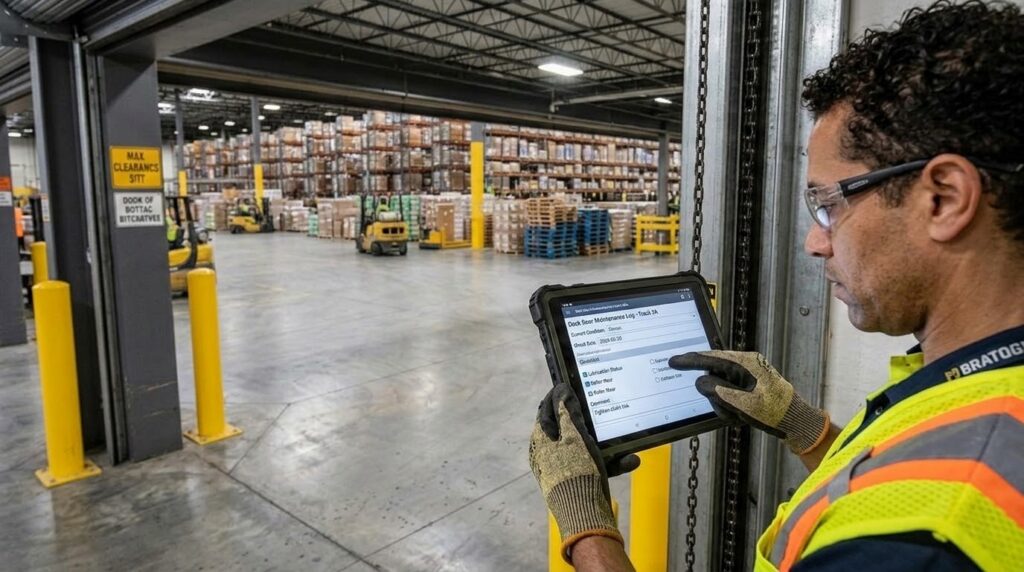
Loading dock doors are wear equipment. They cycle far more than a residential door, carry more weight, and operate in tougher conditions. A door that’s ignored will fail unexpectedly. A door on a maintenance program rarely surprises anyone.
A reasonable maintenance schedule for a busy commercial dock door looks like this. Quarterly visual inspection of panels, hardware, and weatherstripping for damage. Semi-annual professional service including spring inspection, hardware tightening, lubrication of moving parts, and full operational testing. Annual safety inspection of opener systems, photo eyes, and reverse mechanisms. After-hours emergency service availability when something fails outside normal hours.
Common dock door issues that scheduled maintenance prevents include broken springs (the leading cause of unexpected door failure), panel damage from forklift contact, weatherstripping degradation that drives up energy costs, opener motor wear, and track misalignment. Most of these are inexpensive to address proactively and disruptive to address reactively.
If your facility doesn’t have a contracted dock door service program, this is the single highest-leverage operational change you can make. The cost of scheduled service is a fraction of the cost of an unexpected door failure during peak shipping.
FAQs About Loading Dock Doors
What are the main types of loading dock doors?
The three main commercial garage door types used at loading docks are insulated sectional steel doors (the standard for most facilities), high-speed doors or high-performance doors (for high-cycle operations where speed matters), and rolling steel service doors (for tight headroom situations or high-security applications). Most facilities use a mix, choosing the right door for each opening based on cycle count, climate, and security needs.
What is the difference between a high-speed door and a high-performance door?
The terms are used interchangeably. Both refer to commercial doors that open and close at 4 to 8 times the speed of a standard sectional door, typically built with reinforced fabric or rubber panels rather than rigid steel. They’re used at high-cycle docks, food and beverage facilities, cold storage, and any operation where open time is operationally expensive.
Are insulated dock doors worth the cost?
In most Wisconsin facilities, yes. The energy savings from a properly insulated dock door, particularly Thermacore-class three-layer construction, typically pay back the insulation premium within a few seasons of cold-weather operation. The exception is unconditioned warehouses and industrial facilities where insulation isn’t a priority.
How often should commercial dock doors be serviced?
A typical busy commercial dock door benefits from quarterly visual inspections, semi-annual professional service (spring inspection, hardware tightening, lubrication, operational testing), and an annual full safety inspection. After-hours emergency service should be available for unexpected failures during shipping.
What size loading dock door do I need?
Standard commercial dock door openings are typically 8 to 10 feet wide by 8 to 10 feet tall, but actual size depends on the trailer mix you handle and the equipment that travels through the opening. The right way to specify a size is a site visit that confirms opening dimensions, available headroom and sideroom, and how the door interfaces with the leveler and seal in front of it.
Does Overhead Door Company of Madison install and service commercial dock doors?
Yes. Overhead Door Company of Madison installs and services insulated sectional doors (including the Thermacore line), high-speed and high-performance doors, and rolling steel service doors throughout the Madison area and Dane County. We work with facility managers, property managers, and contractors on new installations, replacements, and ongoing maintenance programs. Most service calls are completed in a single visit with stocked parts.
If you manage a commercial facility in the Madison area and need help with a loading dock door, whether you’re specifying a new dock, replacing an aging door, or setting up a maintenance program, Overhead Door Company of Madison can help. As a factory-authorized Overhead Door™ dealer with more than 60 years of local experience and the original Overhead Door brand behind us (the company that invented the upward-acting garage door in 1921), we install and service commercial dock doors throughout Dane County and the surrounding 50-mile service area. Call (608) 271-4288 to schedule a site visit or arrange service.