
If you’ve started researching overhead doors for a commercial building or warehouse, you’ve probably come across the term Thermacore. It gets thrown around a lot, but what does it actually mean, and why does it matter when you’re making a decision that will affect your energy bills for the next 20 years?
Thermacore is Overhead Door Corporation’s premium line of insulated sectional steel doors, and it’s one of the most recognized names in commercial door insulation for good reason. Whether you’re managing a cold storage facility, a loading dock, or an industrial space, understanding what makes Thermacore insulated overhead doors different from standard options can save you real money and prevent a lot of headaches down the road.
This guide breaks down how Thermacore doors work, why insulation matters more than most people realize, and how to figure out which option makes sense for your building.
What Is Thermacore and Why Does It Stand Out?

Thermacore is not just a marketing term for “insulated door.” It refers to a specific construction method where polyurethane foam is injected directly into the door section, bonding the inner and outer steel faces together into a single rigid panel. The result is a door that doesn’t just have insulation sitting inside it, but one where the insulation is structurally part of the door itself.
This matters because a lot of cheaper insulated sectional steel doors use polystyrene (the same material as foam coffee cups) that’s simply laid inside the panel. That type of insulation can shift, compress, and leave gaps over time. Thermacore’s injected polyurethane foam doesn’t move, and it actually adds rigidity to the door, making it more resistant to dents and impact.
R-Value: The Number That Actually Matters
When comparing insulated overhead doors, the most important spec to understand is R-value, which measures thermal resistance. The higher the R-value, the better the door resists heat transfer in both directions.
Thermacore doors are available in different R-value ranges depending on the thickness of the panel and the specific product line. The standard commercial Thermacore model offers R-values that significantly outperform non-insulated steel doors, which typically have an R-value close to zero. For temperature-sensitive environments, Overhead Door also offers higher-performance options with thicker panels and improved thermal performance.
If your facility is climate-controlled, even partially, the R-value of your overhead doors is one of the most overlooked factors in your energy costs.
The Real Cost of an Uninsulated Overhead Door

Most facility managers think about the cost of a door as the purchase price plus installation. That’s the wrong way to look at it, especially for a door that opens and closes dozens of times a day in a Wisconsin winter.
Every time a loading dock door opens, conditioned air escapes. When the door is closed but poorly insulated, heat bleeds through the steel panel continuously. Over the course of a year, that thermal loss adds up to real dollars on your energy bill.
Beyond energy costs, poorly insulated doors create other problems:
Condensation and Moisture Damage
When warm interior air meets a cold, uninsulated steel door, you get condensation. In a warehouse or commercial facility, that condensation can damage inventory, create slip hazards, and accelerate rust on the door itself. Thermacore’s insulated construction keeps the interior door surface closer to room temperature, dramatically reducing condensation buildup.
Worker Comfort and Productivity
If workers are stationed near loading dock doors, temperature fluctuations affect their comfort and focus. Insulated commercial overhead doors help maintain a more consistent interior environment, which matters in food processing, manufacturing, and distribution settings.
Door Longevity
The foam core in Thermacore insulated sectional steel doors adds structural stiffness, which means the door is less prone to warping, flexing, and wind load damage. A stiffer door also puts less stress on the springs, cables, and hardware over time, which can extend the service life of the entire system.
Thermacore Applications: Where Insulated Commercial Doors Make the Most Sense

Not every overhead door needs to be insulated. A detached storage building that’s never heated doesn’t benefit from high R-value panels. But there are specific situations where insulated overhead doors for commercial use are essentially non-negotiable.
Cold Storage and Temperature-Controlled Facilities
This is the most obvious application. If you’re operating a refrigerated warehouse, food distribution center, or any facility where temperature is directly tied to product quality, your overhead doors are part of your refrigeration system. Thermacore doors help minimize the load on your HVAC and refrigeration equipment.
Manufacturing and Production Environments
Factories and production facilities often have strict temperature requirements for quality control. Automotive, pharmaceutical, and electronics manufacturing are good examples of industries where insulated sectional steel doors help maintain stable conditions.
Commercial and Mixed-Use Buildings in Cold Climates
For businesses in the Madison, Wisconsin area, heating costs from November through March are significant. An insulated commercial overhead door on a warehouse, repair shop, or storage facility can reduce heating costs enough to pay for the premium over a standard door within a few years.
Loading Dock Areas
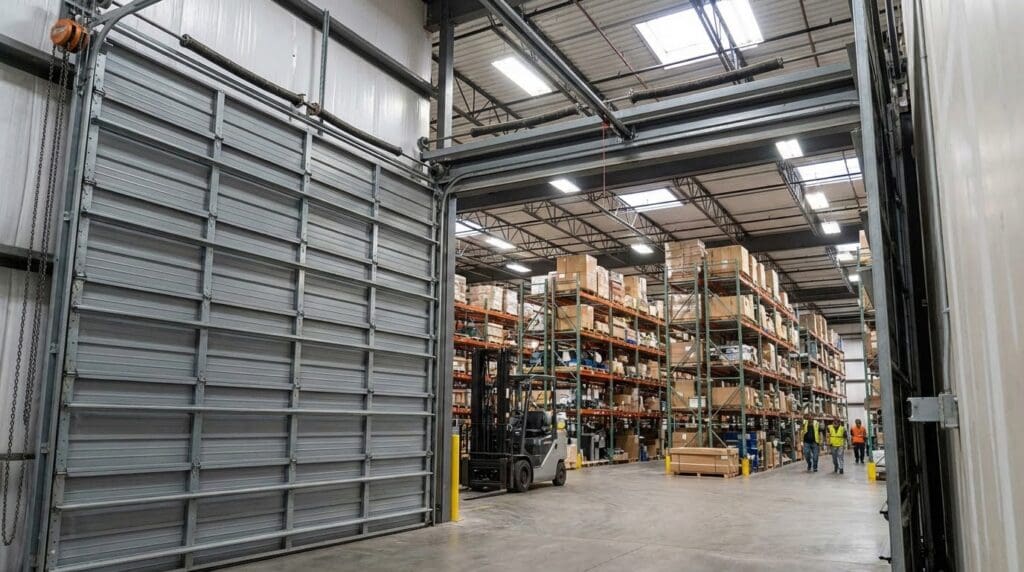
Even if your main facility is well-insulated, a loading dock with poor overhead doors creates a thermal weak point. Insulated dock doors help buffer the temperature difference between the conditioned interior and outdoor conditions.
The foam core in Thermacore insulated sectional steel doors adds structural stiffness, which means the door is less prone to warping, flexing, and wind load damage. A stiffer door also puts less stress on the springs, cables, and hardware over time, which can extend the service life of the entire system.
Choosing the Right Thermacore Configuration
Thermacore doors come in different configurations depending on your requirements. Here’s what to think through when specifying a door.
Panel Thickness
Thicker panels generally mean higher R-values and better thermal performance. However, thicker panels also mean heavier doors, which affects spring sizing, operator selection, and structural requirements for the opening. An experienced overhead door contractor can help you balance performance against mechanical requirements.
Window Options
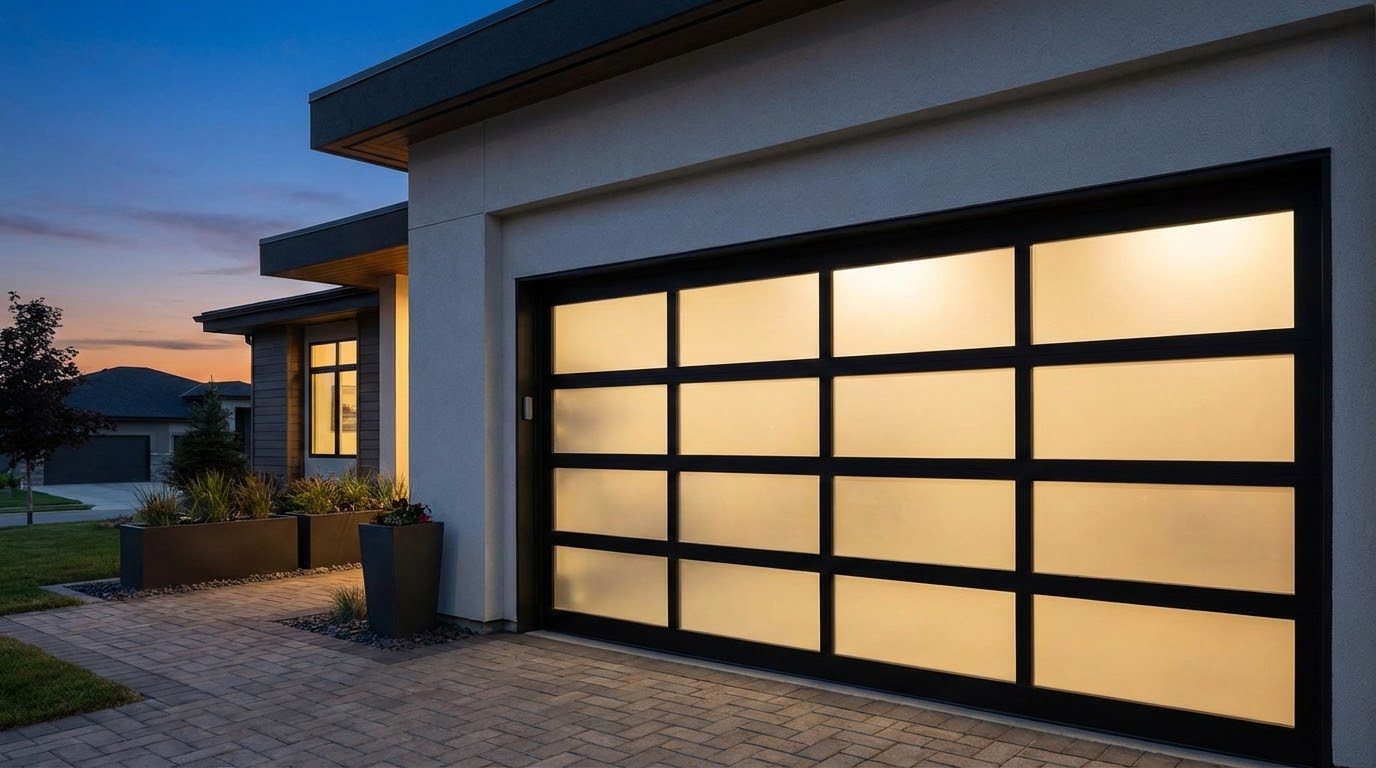
Full steel panels provide the best insulation, but many commercial facilities need some natural light in their dock areas. Thermacore is available with window inserts that balance daylighting with thermal performance. If windows are a priority, look at options with double or triple-pane inserts to avoid creating a thermal bridge in an otherwise well-insulated door.
Finish and Gauge
Commercial insulated overhead doors are available in different steel gauges. Heavier gauge steel offers better dent resistance and longevity, particularly for high-traffic dock doors that see frequent forklift and truck contact.
Installation and Maintenance Considerations

A Thermacore door is only as effective as its installation. Gaps around the door frame, worn weatherstripping, and improperly adjusted bottom seals can negate much of the insulation benefit. When having insulated commercial overhead doors installed, make sure the installer pays attention to:
- Perimeter weatherstripping on all four sides of the opening
- Bottom seal condition and adjustment
- Header clearance and any air gaps at the top of the door
- Proper spring tension to ensure the door seals fully when closed
Ongoing maintenance matters too. Weatherstripping wears down, seals deteriorate, and spring tension changes over time. An annual inspection keeps the door performing the way it was designed to.
FAQs About Thermacore Insulated Overhead Doors
What is the difference between Thermacore insulated overhead doors and standard options?
Thermacore uses injected polyurethane foam that bonds with the steel panels to create a structurally rigid, continuous insulation layer. Standard insulated doors often use polystyrene inserts that can shift and compress over time, reducing effectiveness.
What R-value do I need for a commercial overhead door?
It depends on your application. A heated warehouse in Wisconsin with regular dock traffic typically benefits from an R-value in the range of 10 to 17. Temperature-controlled storage facilities may require higher performance options. A local overhead door specialist can help size the right product for your space.
Are insulated overhead doors worth the extra cost?
For any conditioned commercial space, the answer is almost always yes. The energy savings, reduced condensation, and longer service life typically justify the premium over a standard door within a few years of installation.
Can Thermacore doors be used for residential applications?
Thermacore is primarily a commercial product line. Overhead Door offers separate residential insulated door lines with comparable insulation technology. If you’re looking for a high-performance residential garage door, ask your dealer about residential options with injected polyurethane insulation.
How do I maintain an insulated commercial overhead door?
Annual inspections, weatherstripping replacement as needed, lubrication of springs and hardware, and periodic spring tension adjustment are the main maintenance requirements. A well-maintained insulated door can last 20 to 30 years in commercial applications.
If you’re evaluating insulated sectional steel doors for a commercial facility in the Madison area, Overhead Door Company of Madison can walk you through the options and help you select the right configuration for your building, budget, and energy goals. Contact us to schedule a consultation.