
Every time a door opens at a loading dock, freezer, or production line, conditioned air escapes. In high-traffic industrial facilities, those losses add up fast. Overhead Door™ RapidFlex® high-speed fabric doors are engineered to cut that waste by combining rapid operation, tight perimeter sealing, and smart controls into a single reliable system.
Key Takeaways
- High-speed fabric doors open and close in seconds, dramatically reducing conditioned air loss at every cycle and helping facilities reduce energy costs year-round.
- Overhead Door™ offers interior (Models 990–992) and exterior (Models 993–994) RapidFlex® high-speed fabric doors designed for heavy-duty, high-cycle operation with springless drives and wind load testing.
- Properly selected high-performance doors lower HVAC and refrigeration loads while improving traffic flow, safety, and environmental control across industries from food processing to pharmaceutical warehousing.
- Modern fabric doors do more than save energy-they withstand constant impacts and high-cycle usage with fewer repairs, keeping openings protected and operations running.
- A FAQ section below covers retrofit viability, payback periods, cold storage specifics, maintenance, and safety.
How High Speed Fabric Doors Reduce Energy Loss in High-Traffic Facilities
High-speed fabric doors can significantly reduce heating and cooling costs by minimizing the time a doorway stays open. Rapid opening and closing minimizes conditioned air loss-warm air stays out of cooled spaces, and climate-controlled air stays inside. Sure-Seal® doors open at speeds up to 100 inches per second, while RapidFlex® interior models reach approximately 70 inches per second. Compare that to conventional roll-up door operators at 8–16 inches per second, and the exposure gap shrinks by a factor of four or more.
Air exchange-the simple movement of unconditioned air through an open doorway-is the primary driver of energy loss in warehouses and factories. High-speed doors reduce air loss and contamination risks at every cycle. Tight side guides, curtain locks, and flexible bottom seals on modern fabric roll-up doors limit drafts, pressure loss, dust, and moisture intrusion even when closed. The RapidFlex® Model 991, for example, achieves air infiltration rates of ≤ 0.236 cfm/ft² per ASTM E283.
Reducing temperature swings helps HVAC and refrigeration equipment run fewer hours, extending equipment life and cutting unplanned downtime. High-speed doors help maintain energy savings in facilities with hundreds or thousands of daily cycles, where cumulative savings over a single season can be substantial. High-speed doors also improve traffic flow in logistics centers and high-use areas, reducing wait times for personnel and forklifts.
Energy Challenges in High-Traffic and Cold Storage Environments
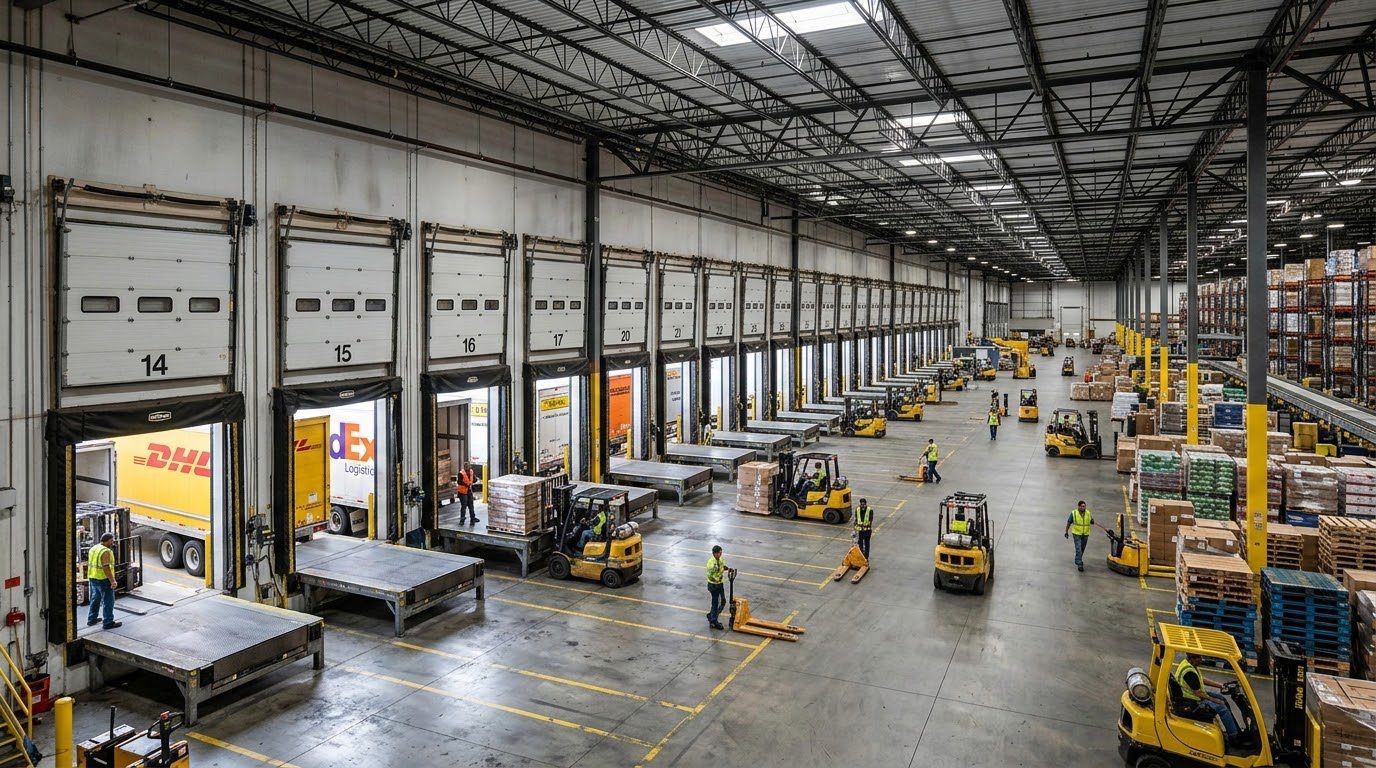
Picture forklifts cycling through loading dock openings dozens of times per hour, pickers moving between distribution aisles, and pallet traffic in freezers where every open second wastes refrigeration. High-speed fabric doors are commonly used in warehouses and factories facing exactly these conditions, and they are used in cold storage and freezer rooms where the cost of infiltration is highest.
High-speed fabric doors facilitate environmental control in cold-storage areas by efficiently separating temperature zones and limiting contamination risks. Frost buildup around slow-closing openings degrades product quality and increases refrigeration load. They are commonly used in manufacturing to block noise and dust, and provide effective barriers against dust and pests, critical in food and beverage processing and pharmaceutical environments. They reduce air loss and contamination risks in operations where uncontrolled humidity, fumes, or insects create waste and compliance issues.
Conventional sectional doors struggle here: slower speeds, heavier metal panels, more wear on springs, and difficulty maintaining a consistent seal under wind or negative pressure. Meanwhile, DASMA research confirms that at 55+ cycles per day, high-speed doors outperform conventional insulated doors in total annual energy consumption-even when the fabric curtain has a higher U-factor-because air exchange during open time dominates losses.
How Overhead Door™ RapidFlex® High Speed Fabric Doors Address Energy Loss
Overhead Door™ RapidFlex® high-speed fabric doors are high-performance doors engineered specifically for high-cycle industrial environments where energy efficiency and environmental control matter. High-speed fabric doors can operate thousands of cycles without slowing down, backed by drive systems rated for over 1,000,000 cycles.
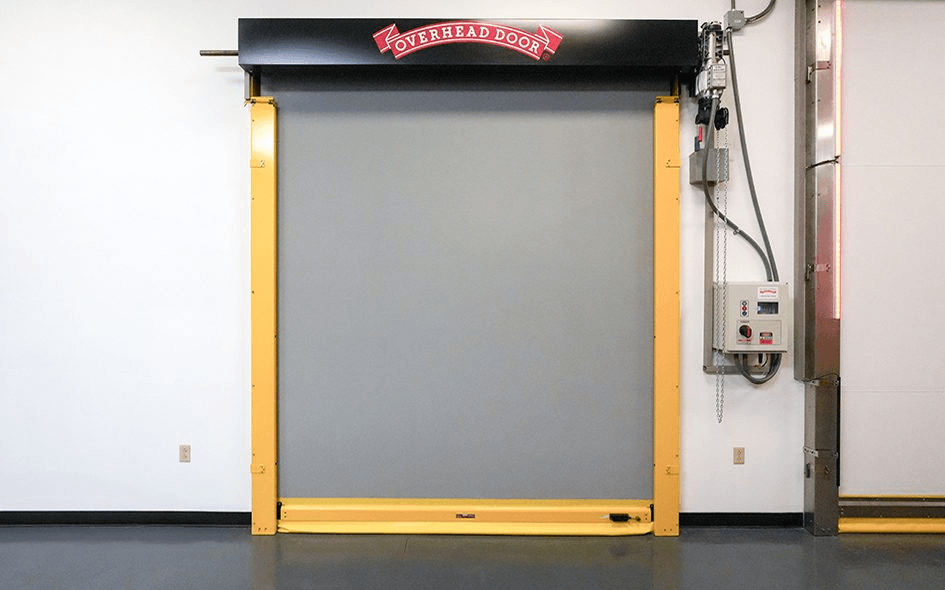
- Interior models (990, 991, 992): Designed for indoor partitions, manufacturing cells, and distribution zones. Springless, direct-drive motor systems eliminate spring replacement downtime. PredaDoor® NXT® features a tight perimeter seal for interior applications requiring strict climate separation.
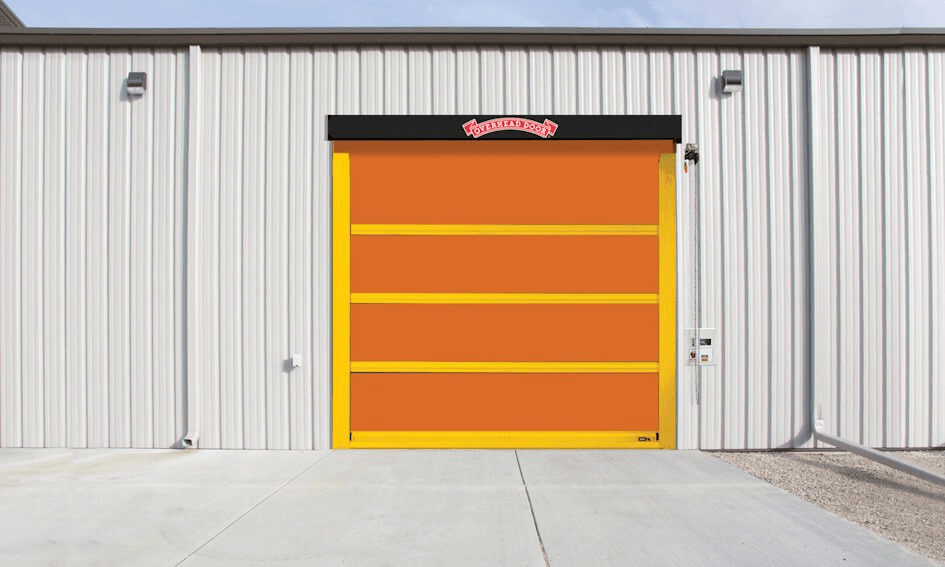
- Exterior models (993, 994): Built for large exterior openings at loading docks and building perimeters with heavier curtains, wind bars, and bottom wind locks. Industrial fabric used in these doors is resistant to punctures and corrosive elements, maintaining reliable performance in harsh weather.
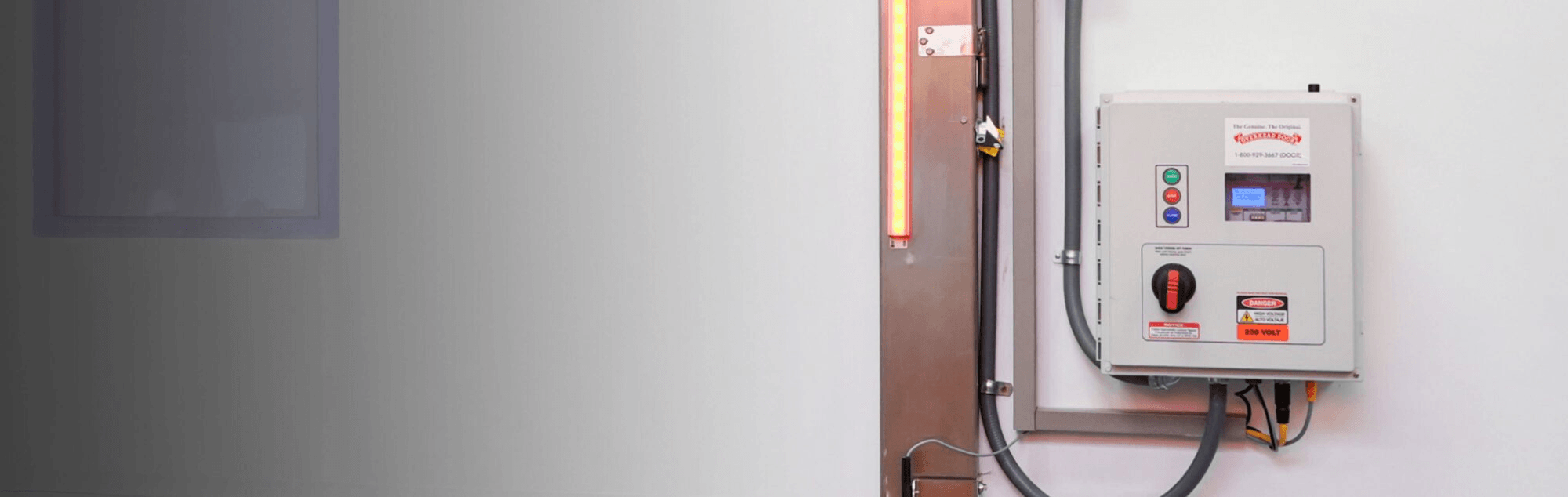
- Controls and sensors: Pairing RapidFlex® doors with motion detectors, pull cords, or vehicle detection ensures the high-speed door only opens when needed and closes promptly, trimming idle open time and further reducing energy costs.
Optional vision panels improve safety and traffic flow without compromising the speed fabric curtain’s ability to protect the conditioned environment.
Interior vs. Exterior High Speed Fabric Doors and Model Selection
Choosing the right high-speed fabric door depends on whether the opening is interior or exterior, the size, expected wind pressure, and traffic type.
Interior applications: Interior high-speed doors operate quietly and quickly. The RapidFlex® Model 990 fits high-traffic interior partitions where impact resistance and pedestrian safety are priorities. Models 991 and 992 use a high-speed fabric curtain with or without struts, plus curtain locks for easier repair and minimal maintenance. They are ideal for cleanrooms and food production lines, where high-speed fabric doors help maintain strict pressure control in cleanrooms and temperature-sensitive zones.
Exterior applications: The Model 993 withstands wind loads up to 19.5 psf. The Model 994 withstands wind loads up to 22.0 psf, the highest in the RapidFlex® lineup. Exterior high-speed doors withstand wind loads up to 22.0 psf, keeping the curtain locked in the guides under pressure for both energy savings and security. These sturdy, durable doors are designed for weather exposure and withstand pressure from wind-driven rain and temperature differentials at commercial and industrial facilities.
Work with an Overhead Door™ distributor to size the door correctly for your opening, accounting for traffic type, cycle counts, local climate, and facility-specific requirements like cold storage or washdown.
Additional Operational Benefits: Safety, Uptime, and Low Maintenance
While reducing energy loss drives most installations, high-speed door technology delivers broader value. Rapid cycling of high-speed doors improves safety in busy industrial environments. Most high-speed fabric doors have a flexible, soft-bottom edge, monitored reversing edges, and photoelectric sensors that protect pedestrians, lift truck operators, and equipment.
- High-speed fabric doors often feature self-repairing capabilities after impacts, and self-repairing designs reduce service calls and downtime compared to conventional doors. Fast-Seal® doors can take hits without damage and minimize downtime and maintenance needs.
- High operational speeds reduce wait times for personnel, and the design of high-speed doors improves workflow efficiency by minimizing downtime. Doors that cycle reliably are more likely to be used properly, not propped open, which is critical for maintaining temperature control, cleanliness, and energy efficiency.
- Springless drives and direct gear systems deliver long life and consistent high-speed operation over many cycles, supporting durability and reliability across manufacturing, food processing, and beverage facilities.
These doors help maintain safety and energy savings in facilities across common applications, from factories and distribution centers to pharmaceutical and food production operations.

FAQ: High Speed Fabric Doors and Energy Savings
How much energy can a high-speed fabric door save compared to a conventional door?
Actual savings depend on climate, door size, traffic volume, and cycle frequency. In many high-traffic facilities, high-speed doors cut air exchange time per cycle by 4–5× versus conventional doors, meaningfully lowering heating, cooling, or refrigeration loads over a year. Some cold storage and distribution operations report measurable reductions in utility bills after replacing slower doors with high-speed fabric models at frequently cycled openings.
Can Overhead Door™ high-speed fabric doors be retrofitted into existing openings?
In many cases, RapidFlex® high-speed fabric doors can be installed into existing structural openings, provided there is adequate side room, headroom, and support for the door guides, fabric roll mechanism, and commercial operator. Schedule a site visit with an authorized Overhead Door™ distributor to verify clearances, electrical requirements, and traffic patterns before finalizing a retrofit plan.
Are high-speed fabric doors suitable for freezers and other cold storage applications?
Yes. High-speed fabric doors are widely used in cold storage because their rapid open and close cycles reduce warm air infiltration, frost buildup, and temperature fluctuations at freezer and cooler doorways. In low-temperature applications, features like heated guides, insulated curtains, and properly configured controls should be selected in consultation with an Overhead Door™ cold storage specialist to replace less efficient options.
What kind of maintenance do high-speed fabric doors require?
RapidFlex® high-speed fabric doors are designed for high-cycle, low-maintenance operation, but facilities should plan periodic inspections of the curtain, guides, safety devices, and drive components as part of routine preventive maintenance. Regular cleaning, prompt repair of impact damage, and adherence to Overhead Door™ service recommendations maintain both energy performance and safety over the life of the door.
How do safety features work on a high-speed door that opens and closes so quickly?
High-speed fabric doors use photoelectric sensors at multiple heights, monitored reversing edges, and soft bottom profiles to detect obstructions and stop or reverse the door instantly. Combined with proper training for forklift operators and pedestrians, these safety systems ensure that high-speed operation does not compromise personnel safety in busy, high-traffic industrial facilities.