
Key Takeaways
- Rolling service doors are upward-coiling steel doors built from interlocking metal slats that wrap around a barrel above the opening, freeing up ceiling and wall space that sectional doors would occupy.
- They fit warehouses, loading docks, self-storage buildings, retail storefronts, and interior separation walls where tight headroom, tight sideroom, higher security, or high-cycle durability matters.
- Rolling steel doors can handle up to 50,000 open and close cycles, and rolling steel doors can be custom-made to 30′ wide and 30′ high to cover large openings.
- Overhead Door Company of Madison supplies and services Overhead Door™ rolling service doors for openings up to 1,500 sq. ft. (139,355 sq. mm), with the industry’s widest array of slat profiles, curtain materials, and colors.
What Are Rolling Service Doors?
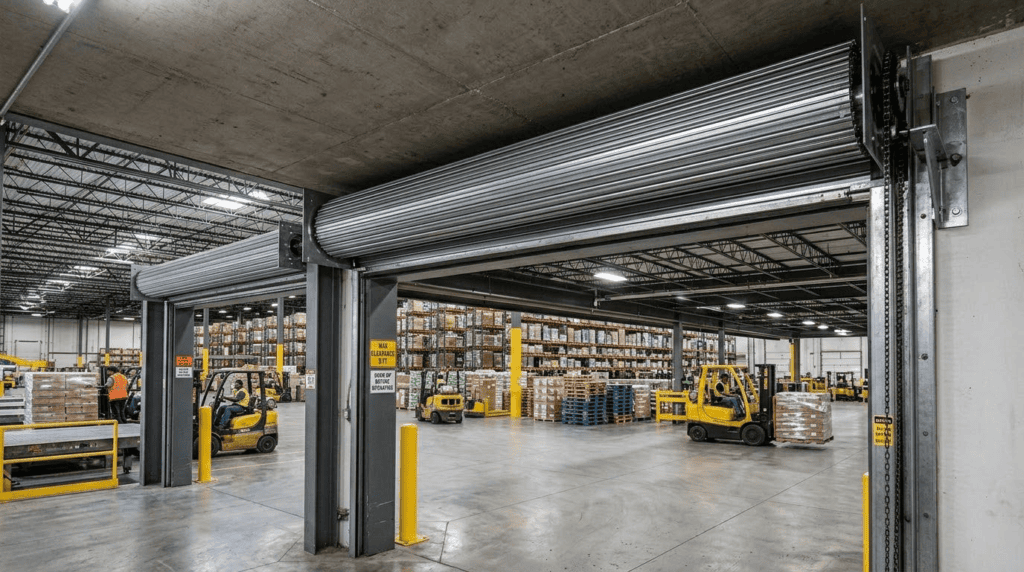
Rolling service doors are heavy-duty security closures that open vertically by coiling a curtain of interlocking metal slats into a compact barrel above the opening. Unlike sectional doors, which ride along horizontal ceiling tracks, rolling doors do not require deep interior tracking space or exterior swing clearance. The curtain travels up and down inside vertical side guides and wraps tightly around a coil drum mounted at the lintel.
A few terms help when reading specs or talking to installers. The “slat curtain” is the assembled surface of the door, formed by horizontal metal slats that interlock edge to edge. The “coil drum” (also called the barrel assembly) is the cylinder the curtain wraps around when the door is in the open position. “Headroom” is the vertical clearance above the door opening needed for the drum, springs, and operator. “Sideroom” is the horizontal clearance on each side of the opening for guides, brackets, and any motor housing.
Rolling doors are engineered from interlocking galvanized steel, stainless steel, or aluminum slats. They can be customized with various finishes and sizes. Overhead Door™ offers this range with the industry’s widest array of slat profiles, curtain materials, and colors so that project specifications can be met across commercial, industrial, and institutional settings. Overhead Door Company of Madison installs these doors in facilities across Greater Madison.
Types of Rolling Service Doors
Rolling service doors come in several configurations. The right door depends on the opening’s location, traffic volume, security requirements, and climate exposure.
Standard Rolling Service Doors for Warehouses and Docks
Standard non-insulated rolling steel service doors are the workhorse choice for shipping and receiving bays, back-of-house access, and general warehouse openings. The Coil-Away™ Model 600 is a light-duty rolling service door suited to lower-traffic openings, while heavier models serve high-frequency dock positions.
- Built for frequent cycling at loading docks and warehouses for high-frequency traffic
- Available in flat slats, curved profiles, and perforated slats for ventilation
- Heavy-duty rollup doors often use 24-gauge steel for durability
- Well suited to distribution centers and manufacturing plants with multiple doors along a dock wall
Insulated Rolling Service Doors
Insulated rolling doors improve thermal efficiency and reduce sound by incorporating foam-core or mineral wool thermal insulation inside the slat profiles. These insulated doors matter most on dock doors of heated or cooled warehouses, cold storage staging zones, and openings between conditioned and unconditioned spaces.
Insulated models also cut drafts at floor level and dampen noise transfer between loud dock areas and adjacent offices. In Wisconsin, where winter temperatures routinely stay below freezing for months, insulated doors with door perimeter weatherseal and weather seal double angle bottom bars reduce heating loads at every dock position. The effective insulation value depends on slat construction and how well edge seals limit air infiltration.
High-Security Rolling Service Doors and Grilles
Heavy-duty steel construction provides superior security compared to lighter door types. Rolling steel doors are made from stronger materials than wood or fiberglass, and the continuous curtain of tightly interlocked slats resists prying and forced entry better than panel joints on sectional designs.
- Common in exterior openings at urban warehouses, parking garage entries, and pharmaceutical storage
- Rolling doors provide secure entry points for parking garages and industrial facilities
- Heavier slat gauges, deeper side guides, and robust locking hardware raise the security threshold
- Overhead Door Company of Madison can pair heavy-duty doors with commercial operators and a site smart lock system for controlled entry
Interior Rolling Counter Doors and Shutters
Counter shutters and smaller rolling doors serve openings inside buildings: parts counters, tool cribs, concession stands, cafeteria serving lines, and secure IT rooms. They use the same upward-coiling mechanism but with reduced curtain size and lighter hardware.
Healthcare facilities use rollup doors as exam room shutters. Restaurants use rollup doors to secure inventory and maintain aesthetics. In warehouses and plants, interior counter shutters close off parts departments or secure storage cages after hours. Finishes and slat styles, including standard black powder coat and powder coated black options, can match interior design while still providing solid security.

How Rolling Service Doors Work
Think of the mechanism like a tape measure: pull the blade out and it extends flat; release it and the coiled spring retracts it into the housing. A rolling service door works the same way, except the “blade” is a heavy steel curtain and the “housing” is a barrel mounted above the opening.
The Upward-Coiling Mechanism
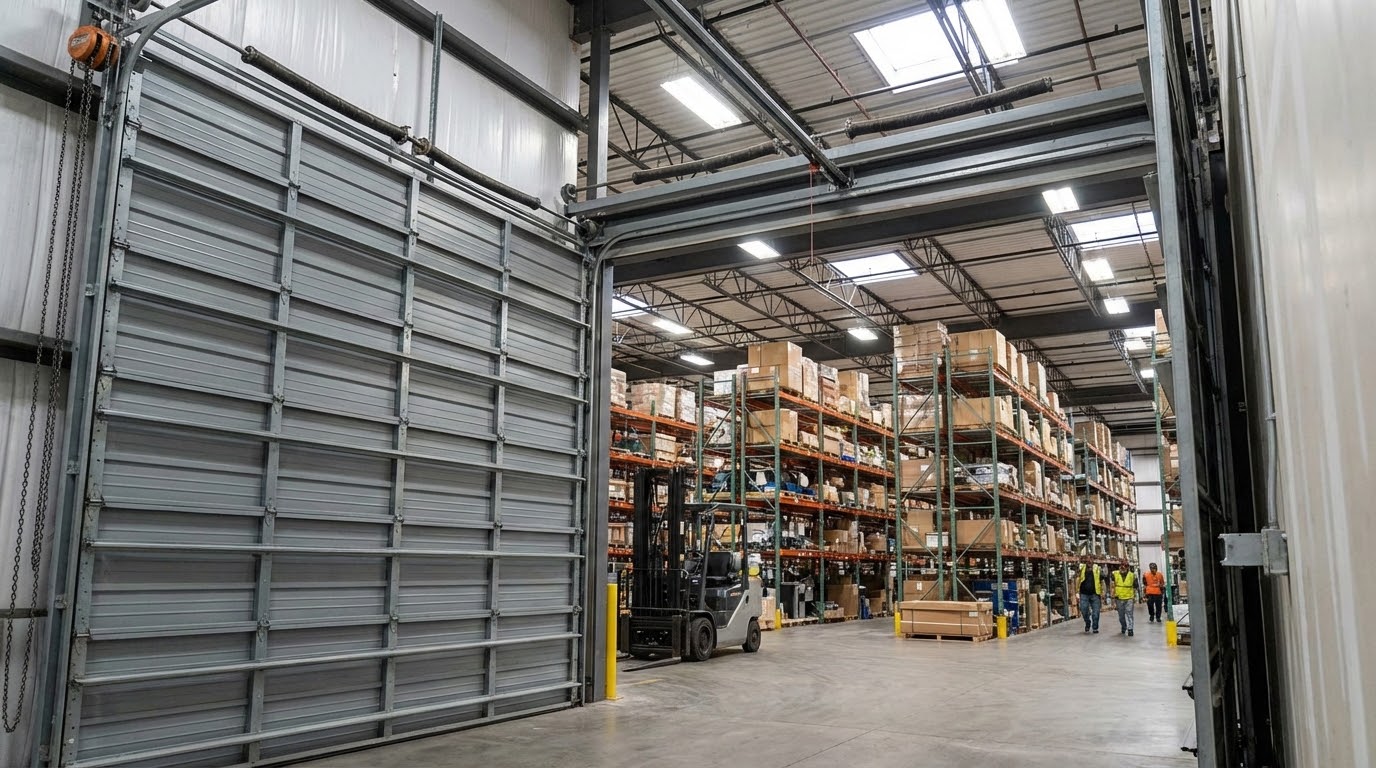
Horizontal metal slats interlock along their edges to form a continuous curtain. When the door opens, the curtain travels vertically in side guides and wraps around the coil drum and shaft assembly above the opening. Springs or a motor operator counterbalance the curtain weight so the door moves smoothly. Rolling doors coil compactly into a barrel above the opening to save space.
Because the curtain coils into a tight bundle, there are no overhead tracks projecting deep into the building. An extruded aluminum barrel simplifying the coil enclosure keeps components clean and protected. Hood covers or chain hoist covers can be added over the drum to shield it from dust, debris, and moisture in warehouse environments.
Headroom, Sideroom, and Guides
Headroom for a rolling door is the space between the top of the opening and the ceiling or the nearest obstruction (sprinkler mains, ductwork, mezzanine floor). Rolling doors typically need less backroom than sectional doors because the curtain coils rather than riding along ceiling-mounted tracks. The exact clearance depends on curtain height, coil diameter, slat profile, and operator type.
Sideroom is the horizontal clearance needed on each side for structural steel wall angles, guide channels, brackets, and any motor housing. While rolling doors are more compact than the track hardware of a large sectional door, sideroom is never zero. In facilities where forklifts, conveyors, or mezzanine columns crowd the opening, rolling service doors are often the only workable option. Overhead Door Company of Madison can verify fit during a site visit and confirm clearances for each opening.
Operation: Manual, Chain Hoist, and Motorized
Three operation methods cover the range of rolling door applications:
- Push-up operation works on small, lightweight doors and counter shutters. An operator lifts the curtain by hand; it stays in the open position through spring tension.
- Chain hoist and wide crank operation suit medium-size doors where motor operation is unnecessary or power is unavailable. The chain multiplies force so one person can raise a heavier curtain.
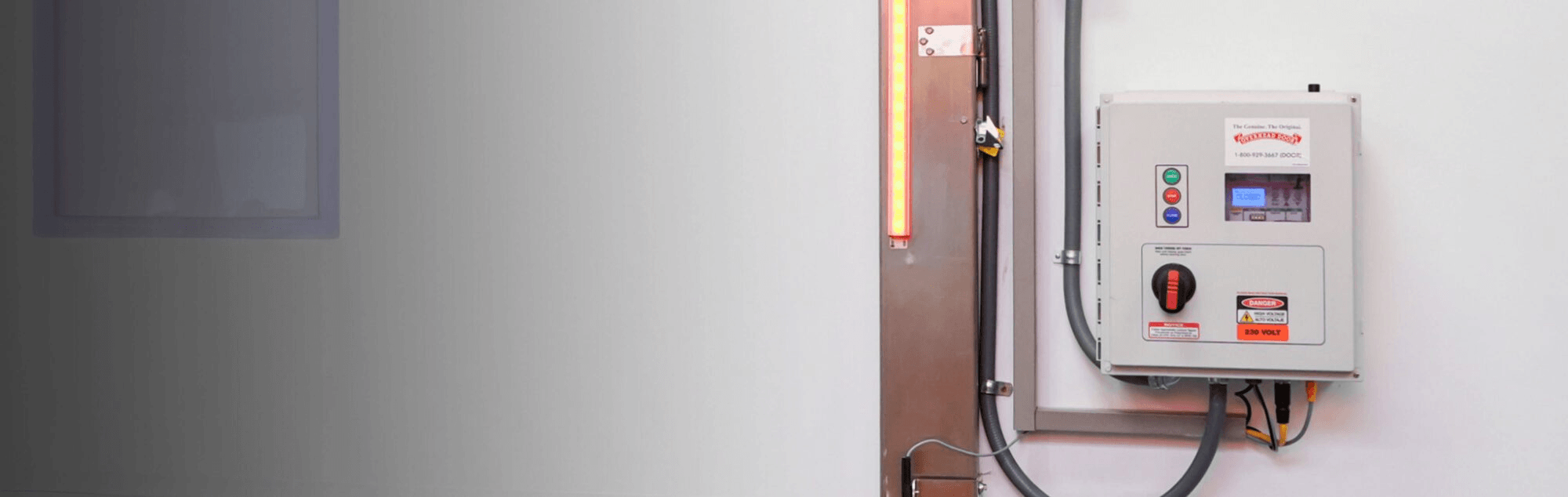
- Motorized operation is standard on busy loading docks. Electric operators open and close the door at the push of a wall-mounted button or remote. High-cycle docks rely on motorized operators tied to photo eye sensors, monitored safety edges, and warning lights for smooth operation in areas with forklift and pedestrian traffic.
Modern rolling doors can integrate emergency safety systems and photoelectric sensors. Operators can connect to access control systems (card readers, keypads) and building security networks. Rolling doors can be operated manually or motorized depending on the application.
Where Rolling Service Doors Are Used
Loading docks are the most visible application, but rolling service doors solve space and security problems across many facility types. Rolling doors are suitable for specialized applications such as fire-rated openings and high-speed access, not just standard dock bays.
Warehouses and Distribution Centers
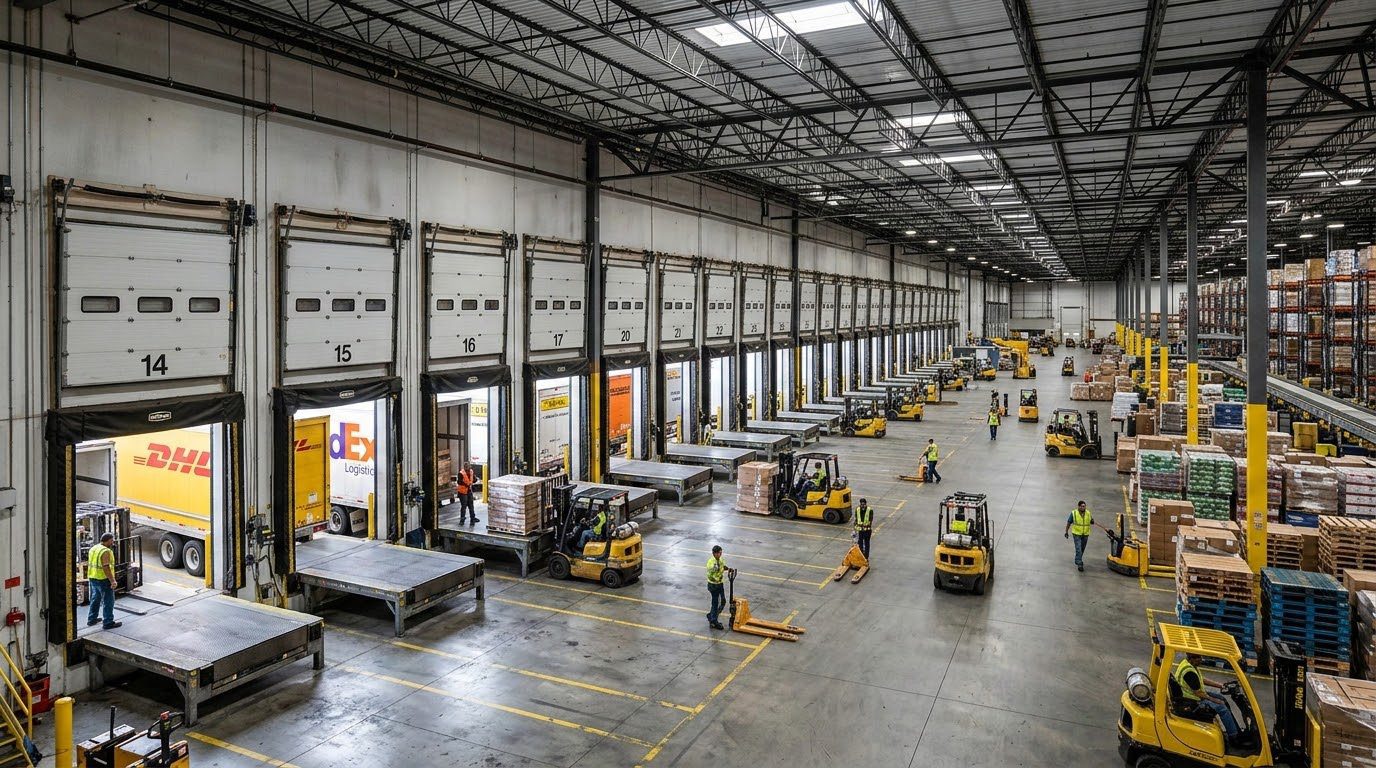
Rolling doors are used in loading docks and warehouses for high-frequency traffic. A distribution center with limited overhead clearance, perhaps due to conveyors or steel trusses near the dock wall, can use rolling steel doors instead of sectional doors to keep every inch of vertical space available for pallet racking and material handling.
- Dock doors for trailer loading and unloading across multiple shift patterns
- Interior doors between ambient and temperature-controlled zones using insulated rolling doors
- Secure inventory rooms and caged areas inside large warehouse floors
- Rolling service doors experience less mechanical wear than multi-panel sectional doors, which reduces downtime on busy docks
Manufacturing and Industrial Facilities
Manufacturing plants use rolling doors on exterior drive-in bays for raw materials and finished goods, and on interior openings between production zones. Doors closed between areas with welding, grinding, or sawdust help contain sparks, fumes, and particulates.
Rolling service doors are built to withstand high-cycle daily use in harsh environments. In plants with overhead cranes, ductwork, and compressed headroom, the compact coiling design avoids conflicts that sectional door tracks would create.
Self-Storage and Mini-Warehouse Buildings
Self-storage facilities utilize rollup doors for security and protection on every unit. Rolling doors deliver consistent appearance across long rows of units, and color options via powder coat finishes let owners match building branding.
Wind and weather performance matter for exposed self-storage sites. Stormtite™ Model 620 doors offer wind load protection up to 20 psf, which helps in locations where standard wind load resistance is a code requirement.
Retail, Schools, and Public Buildings
Retail stores use rollup doors for security after closing. Rolling service doors often serve as durable barriers for retail storefronts and malls, with rolling grilles providing after-hours security while keeping merchandise visible. Solid-slat commercial rolling doors offer visual privacy where needed.
Fire stations use rollup doors for quick access to fire trucks. Schools and public buildings use counter shutters on cafeteria lines and concession stands. The compact coiling mechanism lets these doors tuck into soffits or bulkheads without consuming corridor space.
Interior Separation and Specialty Uses
Interior rolling doors separate conditioned zones from unconditioned ones in large buildings. A cold storage operator, for example, can install insulated rolling doors at dock positions to limit temperature loss between the refrigerated floor and the dock apron.
Fire-rated rolling doors block fire and smoke spread, acting as structural fire barriers per building codes. Many buildings mandate rolling steel fire doors for safety. The Firemiser door reduces sound transfer and thermal transfer between compartmentalized spaces. Fire-rated doors help compartmentalize building spaces during fires, giving occupants more time to evacuate. Equipment rooms, IT closets, and secure cages inside large facilities also benefit from rolling doors where swing doors would block aisles or require floor space that does not exist.

Rolling Service Doors vs. Sectional Doors
Many facility managers weigh rolling service doors against sectional overhead doors for the same opening. The decision usually comes down to a few measurable differences.
Headroom and Sideroom Advantages
Rolling doors coil above the opening rather than running along ceiling tracks. This frees up ceiling space for pallet racking, conveyor systems, fire sprinkler mains, and lighting near the dock wall. In buildings with low ceilings or overhead obstructions, rolling doors are often the only option that fits.
Sideroom requirements for guides and operator hardware exist but are typically more compact than the track assemblies, loading bracket plates, and thick steel headplates that large sectional doors demand. Rolling doors do not require deep interior tracking space or exterior swing clearance, which simplifies installation in tight bays.
Security and Durability
A rolling steel door’s continuous curtain of interlocked slats, paired with deep side guides and double angle bottom bar construction, resists prying and impact better than sectional doors with panel joints and exposed hinge points. For openings protecting high-value goods, pharmaceuticals, or electronics, rolling doors deliver enhanced security.
Rolling steel doors can handle up to 50,000 cycles. Rolling service doors experience less mechanical wear than multi-panel sectional doors because fewer moving parts (no hinged panels, no rollers riding in tracks) are involved. High cycle springs extend operational life on busy docks and reduce the frequency of spring replacements.
When a Sectional Door Might Be Better
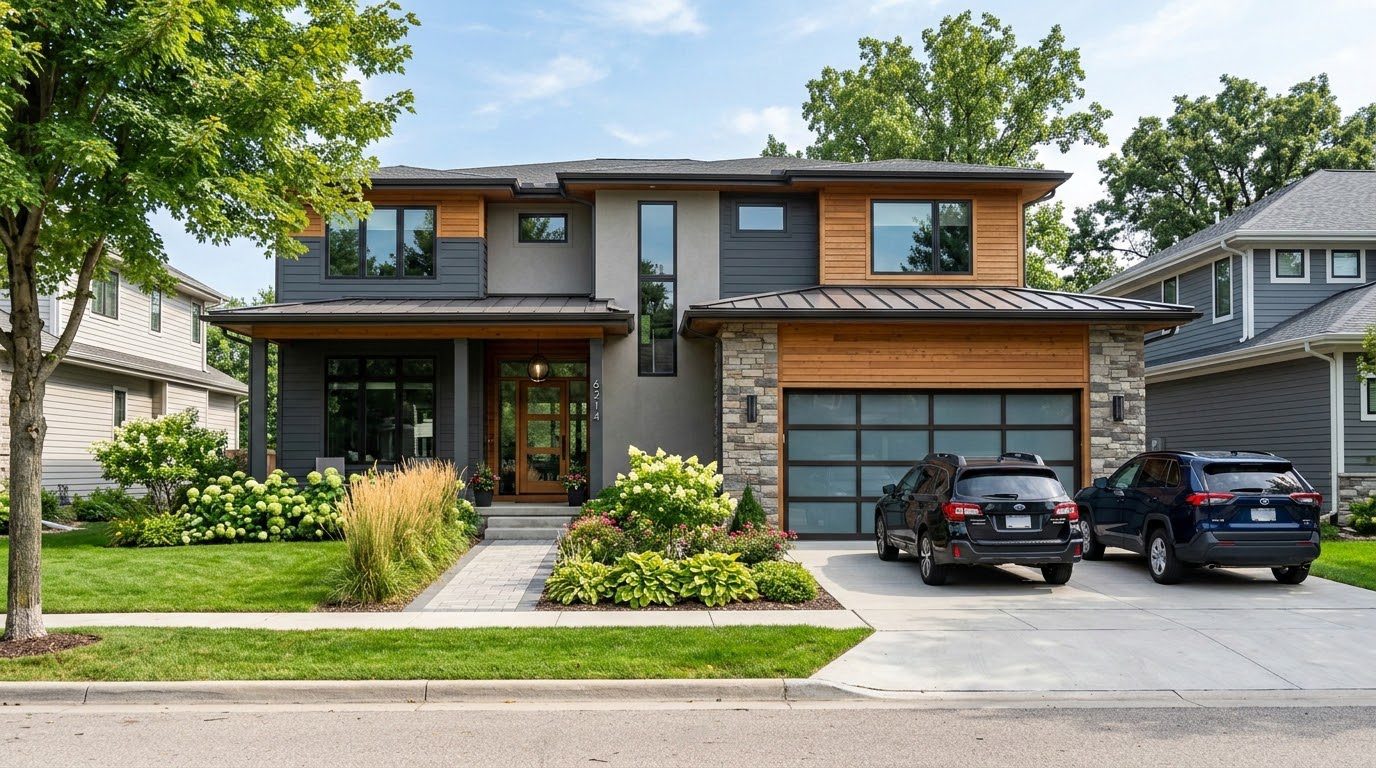
A sectional door may be the better fit when large amounts of ceiling space are already available, when window sections for natural daylight matter more than compact coiling, or when matching existing residential-style garage doors on a mixed-use property. For a broader comparison of sectional, rolling, and high-speed dock door types, see the loading dock door facility management guide (note: this page may have been moved or renamed). Overhead Door Company of Madison can quote both sectional and rolling solutions based on a site assessment.
Key Features to Look For in Rolling Service Doors
Not all rolling doors perform the same. The features below separate a door system that lasts from one that creates problems.
Door Size, Clear Opening, and Fit
Overhead Door™ rolling service doors fit openings up to 1,500 sq. ft. as stated on their product page. Rolling steel doors can be custom-made to 30′ wide and 30′ high, and rolling service doors can be built-to-order within size constraints.
- Match door dimensions to the clear opening, accounting for dock bumpers, levelers, and trailer heights
- Verify that the barrel assembly and any hood cover fit within available headroom
- Professional field measurement prevents interference with lighting, sprinklers, level adjustment curtains, and mezzanines
- Rolling doors offer flexible configurations in size, materials, and finishes
Slat Profiles, Materials, and Finishes
Different slat profiles serve different purposes. Flat slats provide a clean appearance. Curved slats add depth and stiffness to the curtain. Perforated slats allow airflow and visibility. Insulated slats incorporate foam or mineral wool thermal insulation for temperature control.
Material choice follows application. Galvanized steel handles general commercial usage and outdoor exposure. Stainless steel resists corrosion in wash-down or chemical environments. An extruded aluminum option reduces weight, making motor operation a lighter and easier task. Finishes range from cold galvanizing sloped coatings to powder coat colors that match brand standards or building exteriors.
Insulation and Environmental Performance
Insulated slats paired with weather seal optional packages and door perimeter weatherseal reduce heat loss, drafts, and condensation around dock doors. In Wisconsin, where heating costs climb from November through March, insulated doors on exterior or dock-facing openings reduce the energy load on HVAC systems.
Insulated rolling doors improve thermal efficiency and reduce sound. The effective insulation value depends on slat construction, seal quality, and how often the door stays open during operations. For dock positions that cycle dozens of times per shift, faster-operating door models or a high performance door variant limits the time the opening is exposed.
Operators, Controls, and Safety Systems
Matched commercial operators sized for door weight and high cycle usage prevent premature motor failure. Modern rolling doors can integrate emergency safety systems and photoelectric sensors, including photo eye sensors at the base and monitored safety edges along the bottom bars.
- Light curtain springless barrel designs simplify safety sensor integration on certain door models
- Operators can tie into building access control (card readers, keypads) and fire alarm systems for automatic closing
- Pre installed curtain documents and product brochure installation instructions from the manufacturer guide correct operator pairing
- Overhead Door Company of Madison coordinates operator selection and smart control integration during specification
Serviceability and Maintenance Access
Rolling steel doors require minimal maintenance and are easy to install when designed with accessible tension adjustment points, removable hood covers, and standardized components. Universal fastening guides and external mount doors documents simplify service calls.
Choosing door models supported by a local provider with 24/7 emergency capability matters for warehouse operations that run multiple shifts. Overhead Door Company of Madison provides that support across Greater Madison. Ask about recommended maintenance intervals, cycle-based inspection plans, and extending operational life documents at purchase time.

How to Choose the Right Rolling Service Door
Selecting the right door means matching a short list of site conditions and operational needs to the correct product configuration.
- Opening size and available space – Measure exact opening width, height, headroom, and sideroom. Confirm that the chosen model’s barrel, guides, and operator fit without conflicting with sprinklers, conveyors, or structural columns. Rolling doors can be custom-made to specifications within published size limits.
- Usage frequency and traffic type – A dock door cycling 40 times per day needs heavier-gauge slats, high cycle springs, and motorized operation. A tool room door opened a few times a week can use chain hoist or push-up operation. Rolling doors are designed for up to 50,000 cycles under standard maintenance.
- Security and risk level – Facilities storing high-value inventory, pharmaceuticals, or electronics should specify heavier slat gauges, grille locks automatically documents-compliant hardware, and integrated access control. Standard galvanized steel doors suit lower-risk storage.
- Energy efficiency and interior comfort – Insulated rolling doors with perimeter seals belong on any opening that separates a conditioned interior from outdoor conditions, especially in cold climates. For mild interior separation, non-insulated doors keep costs lower.
- Environment and exposure – Corrosive, wet, or wash-down environments require stainless steel or specialty coatings. Exterior doors facing prevailing winds need wind load ratings; the standard wind load for some Overhead Door™ models is 20 psf. Interior applications on uneven surfaces may need adjustable guides.
- Local codes and wind exposure – Check stringent building codes for wind load, fire separation, and egress requirements in Madison and surrounding municipalities before finalizing a model. Fire-rated doors are structural fire barriers per building codes where required. Doors comply with applicable standards when correctly specified.
- Service and lifecycle cost – Factor in long-term maintenance, parts availability, and 24/7 emergency service access. The lowest purchase price often does not equal the lowest total cost over the door’s operational life. Installation options include self-installation or local dealer coordination, but professional installation by trained technicians is the safer path for commercial openings.
Rolling Service Door Installation and Maintenance
This section gives a high-level overview for planning purposes. Rolling service doors are heavy equipment. Installation and service must be performed by trained technicians for safety and code compliance.
What to Expect During Installation
A typical installation follows this sequence: site measurement and verification, removal of any existing door, mounting of brackets and structural steel wall angles, hoisting the barrel and curtain into position, aligning side guides, setting travel limits, and testing all safety devices.
For a standard dock door, expect a half-day to a full day per opening depending on conditions such as power availability, structural readiness, and access. Plan around production or dock schedules because the opening will be out of service during work. Quick installation is possible when the opening is prepped and the pre installed curtain documents are reviewed in advance. Technical specifications installation instructions from the manufacturer should be on site before work begins.
Preventive Maintenance and Safety Inspections
Routine maintenance keeps rolling doors cycling reliably and safely. Recommended checks include visual inspection of slats and guides for damage or wear, balance testing, lubrication of moving parts, and verification that photo eye sensors and safety edges function correctly.
At minimum, inspect doors annually. High-cycle doors on busy docks, those running 20,000 cycles or more per year, need inspection every six months or quarterly. Overhead Door Company of Madison offers preventive maintenance plans that reduce unplanned downtime and extend door life.
24/7 Emergency Repairs and Common Issues
Common problems facility managers encounter: doors out of balance, damaged or bent slats, operator faults, and doors stuck partially open. A bottom bar dragging on uneven surfaces or a broken spring can take a dock position out of service at the worst time.
Do not attempt spring or balance adjustments. Springs under tension store enough energy to cause injury or death. Keep staff clear of the opening and contact a trained technician. Overhead Door Company of Madison offers 24/7 emergency service throughout Greater Madison for critical warehouse and dock doors. Have your door size, model, and a basic description of the problem ready when you call.

Why Choose Overhead Door Company of Madison for Rolling Service Doors
Overhead Door Company of Madison has served commercial and industrial facilities in Greater Madison since 1959. Their technicians are factory-trained on the full Overhead Door™ rolling product line, from the Coil-Away™ Model 600 to heavy duty doors and overhead coiling doors.
Local Expertise for Warehouses and Docks
The company works with warehouse, manufacturing, and logistics facilities in Madison, Verona, Middleton, Sun Prairie, and surrounding communities. That local presence means familiarity with area building codes, Wisconsin weather patterns (freeze-thaw cycles, snow loads, wind exposure), and the common dock layouts found in regional distribution hubs.
Technicians trained on Overhead Door™ commercial slat door products handle everything from straightforward dock replacements to complex interior separation projects with fire doors and access control integration.
Full Lifecycle Support: From Specification to Service
Overhead Door Company of Madison helps select the right rolling service door model, operator, and controls based on a site walk-through and usage analysis. Support covers the full lifecycle: specification, installation, planned maintenance, and emergency repairs for the operational life of the door.
Contact Overhead Door Company of Madison for a site assessment and quote on your next rolling door project.

Frequently Asked Questions
These FAQs address the sizing, performance, and safety questions facility managers ask most often about rolling service doors.
How much headroom does a rolling service door need?
Headroom requirements vary by door height, coil diameter, slat profile, and operator type. A taller door creates a larger coil, which needs more clearance above the opening. Motor operators add to headroom needs compared to chain hoist or manual operation. In general, rolling doors need less backroom than sectional doors because the curtain coils into a barrel rather than running along ceiling tracks, but the space above the opening is never zero.
Do not rely on generic charts. Overhead Door Company of Madison measures and confirms headroom and sideroom for each opening during a site visit so the door fits without interfering with sprinklers, lighting, or structural members.
Are rolling steel doors more secure than sectional doors?
Rolling steel doors use a continuous curtain of interlocked steel slats, deep side guides, and heavy bottom bars. Sectional doors have panel joints and hinge points that create potential pry points. For many high-security openings, rolling doors are preferred because they are harder to force and can be paired with robust locking hardware and access control.
Actual security performance depends on the chosen model, slat gauge, guide depth, lock type, and monitoring. A 24-gauge heavy-duty rolling steel door with integrated access control provides a different level of protection than a light-duty counter shutter. Specify based on the threat, not just the opening size. They provide security against unwanted entry and weather protection.
Can rolling service doors be insulated for energy efficiency?
Yes. Insulated rolling doors use slats with foam or mineral wool cores and perimeter seals (guide seals, bottom astragal, lintel seal) to reduce heat transfer and air infiltration. They benefit heated warehouses, temperature-controlled loading areas, and spaces adjacent to offices or showrooms.
The tradeoff: insulated rolling door slats generally provide a lower R-value than thick insulated sectional door panels because of the joints between slats and the coiling mechanism. ROI depends on climate, door cycle frequency, hours open per shift, and local energy costs. An Overhead Door Company of Madison consultant can help determine where insulated doors deliver the best payback in a given facility.
How long do rolling service doors typically last?
Lifespan depends on cycles per day, maintenance quality, environmental exposure, and product grade. Rolling doors are designed for up to 50,000 cycles under standard maintenance conditions. A dock door cycling 30 times per day accumulates roughly 10,000 cycles per year, which means the spring and hardware package can last several years before major service is needed.
Regular inspections, lubrication, and prompt replacement of worn slats or seals extend service life. Neglected doors fail sooner, and a broken spring or jammed curtain can take a dock position offline during peak shipping hours. Schedule preventive maintenance rather than waiting for failure.
What should I do if a rolling service door is damaged or stuck?
First, secure the area. Stop all attempts to operate the door and keep staff away from the opening. A door that is off its guides or out of balance can drop without warning.
Do not attempt to adjust springs, shafts, or the barrel assembly. These components are under high tension and require trained technicians with the correct tools. Contact Overhead Door Company of Madison for 24/7 emergency assessment and repair. Have the door model, approximate size, and a description of the problem ready when you call to speed up dispatch.
Can rolling service doors be integrated with my building’s access control or fire system?
Modern operators can tie into card readers, keypads, and building management systems for access control. Fire-rated rolling doors can connect to fire alarm panels for automatic closing when smoke or heat is detected. Rolling doors are suitable for specialized applications such as fire-rated openings when specified correctly.
Integration options depend on both the chosen operator and the building’s existing fire and security infrastructure. Involve Overhead Door Company of Madison early in the project so they can coordinate with your security and life-safety contractors before wiring and controls are finalized.
Next Steps: Plan Your Rolling Service Door Project
Start by assessing each opening: measure dimensions, note headroom and sideroom constraints, and document usage patterns and security needs. Then consult a specialist who can match those conditions to the correct rolling door configuration.
Review the Overhead Door™ rolling doors product page for model overviews, and contact Overhead Door Company of Madison for a site visit and quote. For a broader comparison of dock door types including sectional and high-speed options, see the loading dock door facility management guide (note: this page may have been relocated or renamed).